
To treat nitrogen from wastewater,DenitrificationThis page shares basic knowledge about denitrification processes.
Why do we need to process nitrogen?
First of all, do you know why we need to process nitrogen? A common explanation for this is:red tideとBlue-greenThis is a natural phenomenon caused by nitrogen, known as [name of phenomenon].
Red tide and blue-green algae
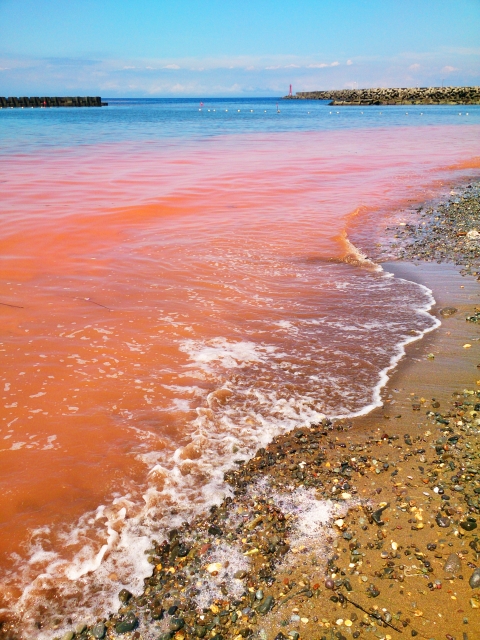
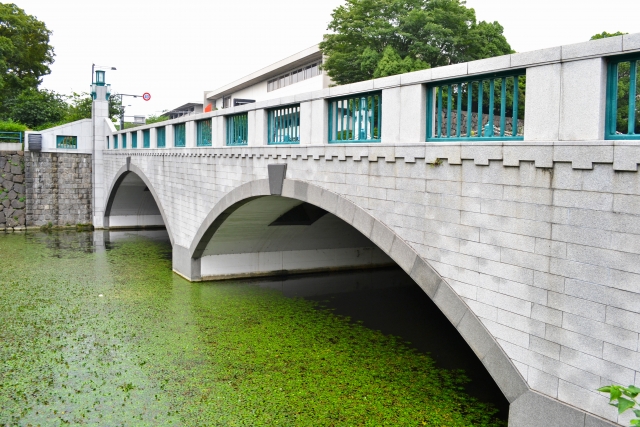
Both phenomena involve the rapid growth of phytoplankton as nitrogen-rich water flows into oceans or lakes, eventually covering the water's surface.
Nitrogen is essential for the growth of plants and vegetables, as it is used in fertilizers and other applications. Therefore, an increase in nitrogen concentration in water can lead to rapid growth of phytoplankton.
When red tides or algal blooms occurThe scenery deteriorates.That's not all. When phytoplankton cover the water surface, sunlight cannot penetrate the water, and aquatic plants are unable to photosynthesize. As a result,Dissolved oxygen concentration decreasesAnd the fish in the area died out.Foul odor and decline in fish catchThis leads to...
In this way, if nitrogen is not removed,It has a negative impact on industries such as tourism and fishing.。
Methemoglobinemia
It also has adverse effects on human health. Nitrogen seeps into the ground.Groundwater contaminationThis can cause problems. If infants ingest well water containing high concentrations of nitrogen,This condition, known as methemoglobinemia (or blue baby syndrome), is caused by a lack of oxygen due to the inhibition of hemoglobin's ability to bind with oxygen in the blood.The nitrate nitrogen that causes this problem is not volatile, so boiling will not help.
Thus, the negative effects of not processing nitrogen are by no means insignificant.
There are four types of nitrogen in wastewater.
Now that you understand the importance of treating nitrogen in wastewater, let's discuss the different types of nitrogen. Even though we're talking about treating nitrogen, there isn't just one type of nitrogen in wastewater. There are four types of nitrogen.

Types of nitrogen
Organic nitrogen
Organic nitrogen is organic nitrogen derived from proteins and amino acids. Solid organic nitrogen present in wastewater can be treated by coagulation.
Ammonia nitrogen
Ammonia nitrogen exists as ammonium ions (NH4+) or ammonia (NH3). Under aerobic conditions (high dissolved oxygen levels), it is converted into nitrate nitrogen and nitrite nitrogen by microorganisms (nitrification).
Nitrite nitrogen
Nitrite nitrogen is nitrogen that exists as nitrite ions (NO2-). It is the substance that causes methemoglobinemia, as mentioned earlier.
Nitrate nitrogen
Nitrate nitrogen is nitrogen that exists as nitrate ions (NO3-). In an oxygen-free environment, microorganisms convert nitrate nitrogen into nitrogen gas (N2). (Denitrification)
Nitrification and denitrification
Nitrogen treatment of wastewater is carried out in two stages.
nitrification
This stage involves converting ammonia nitrogen into nitrite nitrogen and then nitrate nitrogen.nitrifying bacteriaThis process is carried out by microorganisms that work under aerobic conditions. Nitrification simply converts ammonia nitrogen into nitrate nitrogen. Therefore, the nitrogen in wastewater has only changed its form.The total amount of nitrogen remains essentially unchanged.
Denitrification
This stage involves converting nitrite nitrogen and nitrate nitrogen into nitrogen gas.Denitrifying bacteriaThis process is carried out by microorganisms that work in an oxygen-free environment. The sulfur oxidation denitrification method used by our company is also a technology in this field.Denitrification is the first way to reduce the total amount of nitrogen in wastewater.
Discharge standards in Japan and overseas
The permissible nitrogen concentration for discharge is determined by the Ministry of the Environment under the Water Pollution Control Act.Click here for the Ministry of the Environment's page.In fact, Japan has higher environmental regulations compared to China, South Korea, and Southeast Asia.
Comparison of nitrogen discharge standards in Japan and other Asian countries
Total nitrogen concentration in discharged water in Japan: 100 Sprawl
Total nitrogen concentration in South Korea's effluent: 20~25 Sprawl
Total nitrogen concentration in discharged water from China: 5~15 Sprawl
Southeast Asia, including the Philippines: 10~ 14 Sprawl
I believe that geographical factors such as Japan's rivers having a faster current and higher natural purification capacity compared to other countries also play a role in this, but there is a possibility that the regulations will become stricter in the future due to demands from other countries.
biological denitrification
We have looked at nitrification and denitrification as methods for processing nitrogen, but I would like to delve deeper into denitrification methods. Denitrification methods involve using the power of microorganisms.Biological denitrification treatmentThere are also chemical denitrification treatments, such as those using ion exchange resins. Here, we will discuss biological denitrification treatments.
Heterotrophic denitrification and autotrophic denitrification
Biological denitrification was performed using heterotrophic bacteria.Heterotrophic denitrificationand using autotrophic bacteriaAutotrophic denitrificationThere are two types.
Differences between heterotrophic and autotrophic bacteria
The difference between the two is,What carbon sources are used to produce organic matter, which is essential for living organisms?That's the difference. Heterotrophic bacteria use organic matter as their carbon source.The carbon source for autotrophic bacteria is carbon dioxide.So, let's look at the differences in denitrification treatments resulting from this.
Heterotrophic denitrification
Heterotrophic bacteria, which play a vital role in heterotrophic denitrification, utilize organic matter as a carbon source. Therefore, organic matter is necessary in wastewater.
In heterotrophic denitrification, the ideal ratio of carbon (C): nitrogen (N): phosphorus (P) when denitrifying wastewater is C : N : P = 100 : 5 : 1That's the rule. In other words, if you want to process 5 kg of nitrogen, you need 100 kg of carbon and 1 kg of phosphorus.
If there is a shortage of carbon sources, organic carbon sources such as methanol are added to compensate. However, this also increases BOD. Therefore, measures such as installing a re-aeration tank are necessary.
merit
- The initial costs are relatively low.
Disadvantages
- The continuous supply of methanol is required, resulting in significant running costs.
- Meeting stringent environmental regulations regarding nitrogen requires meticulous operational management of nitrogen and BOD, which can lead to unstable treated water quality and make operation difficult.
Autotrophic denitrification
Autotrophic bacteria, which play a vital role in autotrophic denitrification, utilize carbon dioxide as a carbon source. Therefore, the absence of organic matter in the wastewater is not a problem. (Our company)Sulfur oxidizing denitrifying bacteria(This also falls under this category.)
Therefore, for example, high nitrogen load and distorted CNP ratioAnaerobic digestant,andIt is ideal for treating industrial wastewater, such as inorganic wastewater.When treating these wastewaters with heterotrophic denitrification, the carbon source is insufficient to meet the nitrogen load, so it is necessary to supplement it with chemicals such as methanol.
However, with autotrophic denitrification methods such as sulfur oxidation denitrification, no chemicals are necessary. This eliminates the need for chemical replenishment, storage, and adjustment of dosages.It also eliminates the need for complicated management costs.
merit
- There are no ongoing costs for the medication.
- This will enable stable processing in accordance with strict environmental regulations.
