
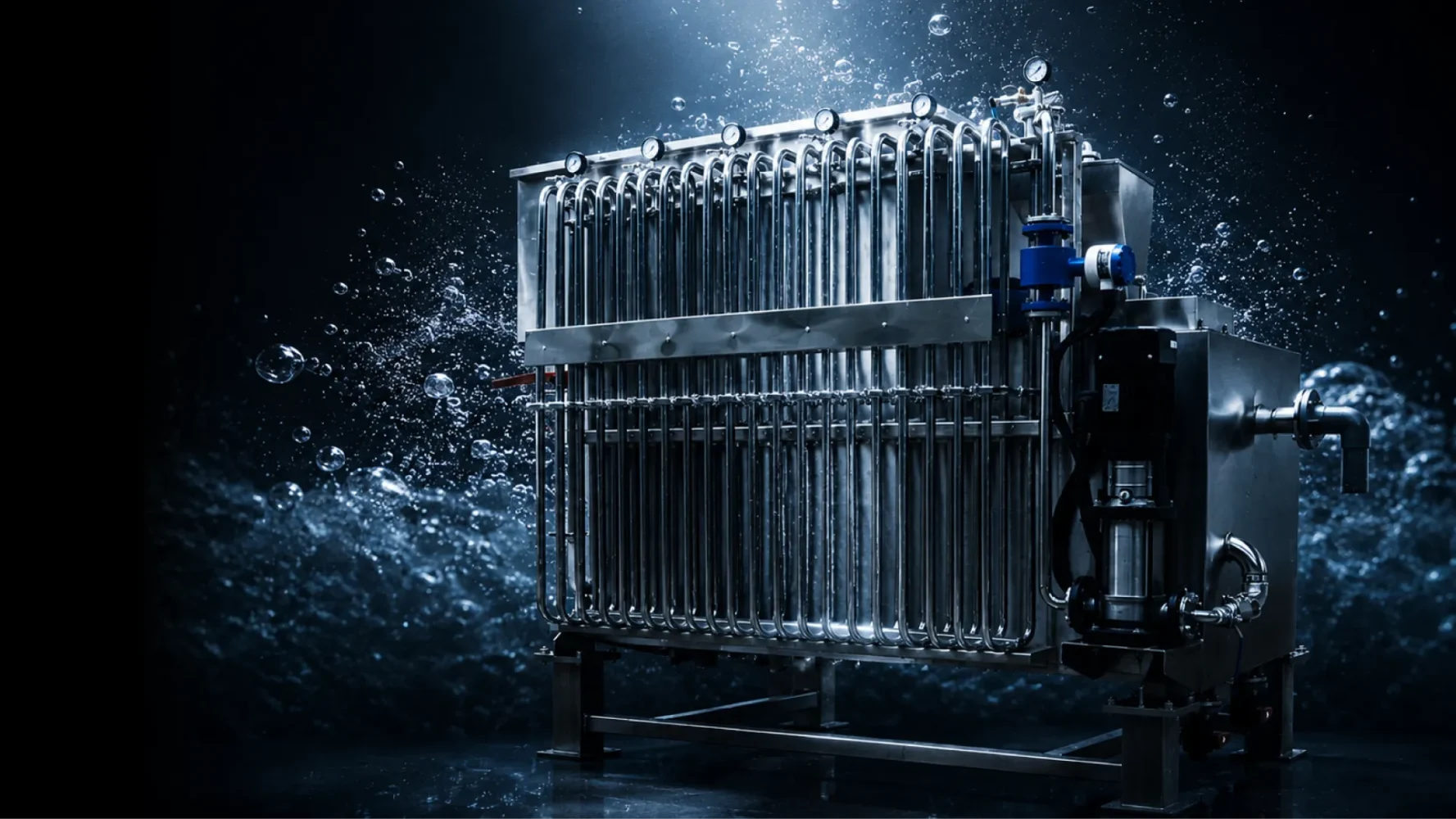
Small and highly efficient.
Next-generation pressurized levitation.
With highly efficient fine bubble mixing technology
Excellent solid-liquid separation performance and
Achieves space-saving design.
Significantly improved wastewater treatment costs and workload.
PROBLEM
Do you have any of these problems?
Turbidity and odor of wastewaterを
I want to improve
solid-liquid separationが
It's not working
Drug and operating costs
I want to lower it
The facilities are large
Takes up space
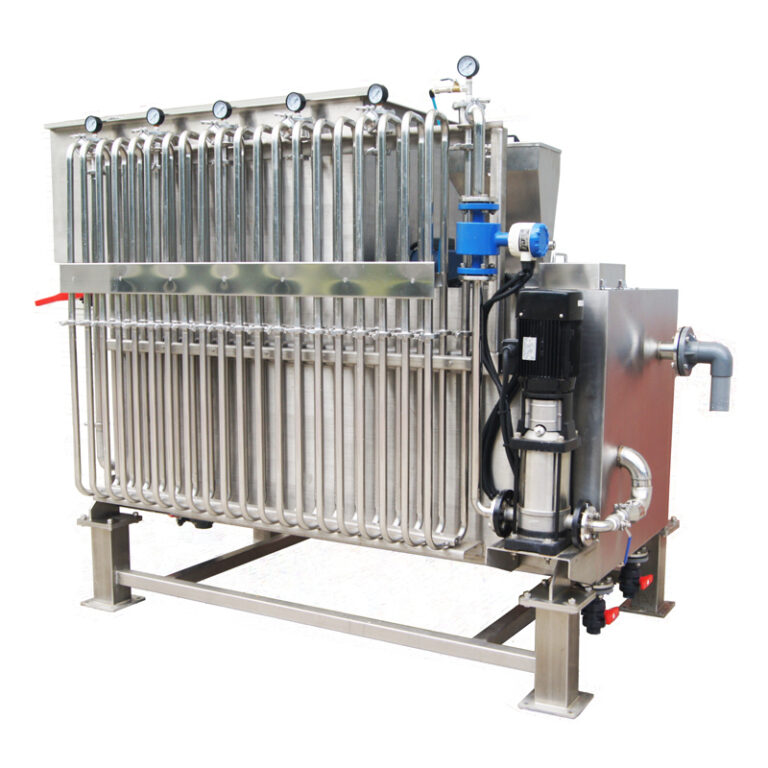
What is the QCL-SDAF pressurized levitation device?
High-concentration fine bubblesで
Efficiently separates suspended solids
Pressurized levitation system
Retail
Benefits of implementation
01
The state of the drainage
Dramatically improved
High flocculation, deodorizing, and decolorizing effect
02
Time-saving & cost reduction
- Reduced processing time
- Drug reduction
- Reduced maintenance load
03
Space-saving
The coagulant should be about 1/3 to 1/2 the size of that used in conventional equipment, and the minimum amount is sufficient.
High processing efficiency and reduced processing time.
This is ideal for this type of equipment.
- Food factory
- Oil-containing wastewater
- Washing drainage
- Livestock wastewater
- Pre-treatment and post-treatment of biological processes, etc.
TECHNOLOGY
Generates high-concentration fine bubbles
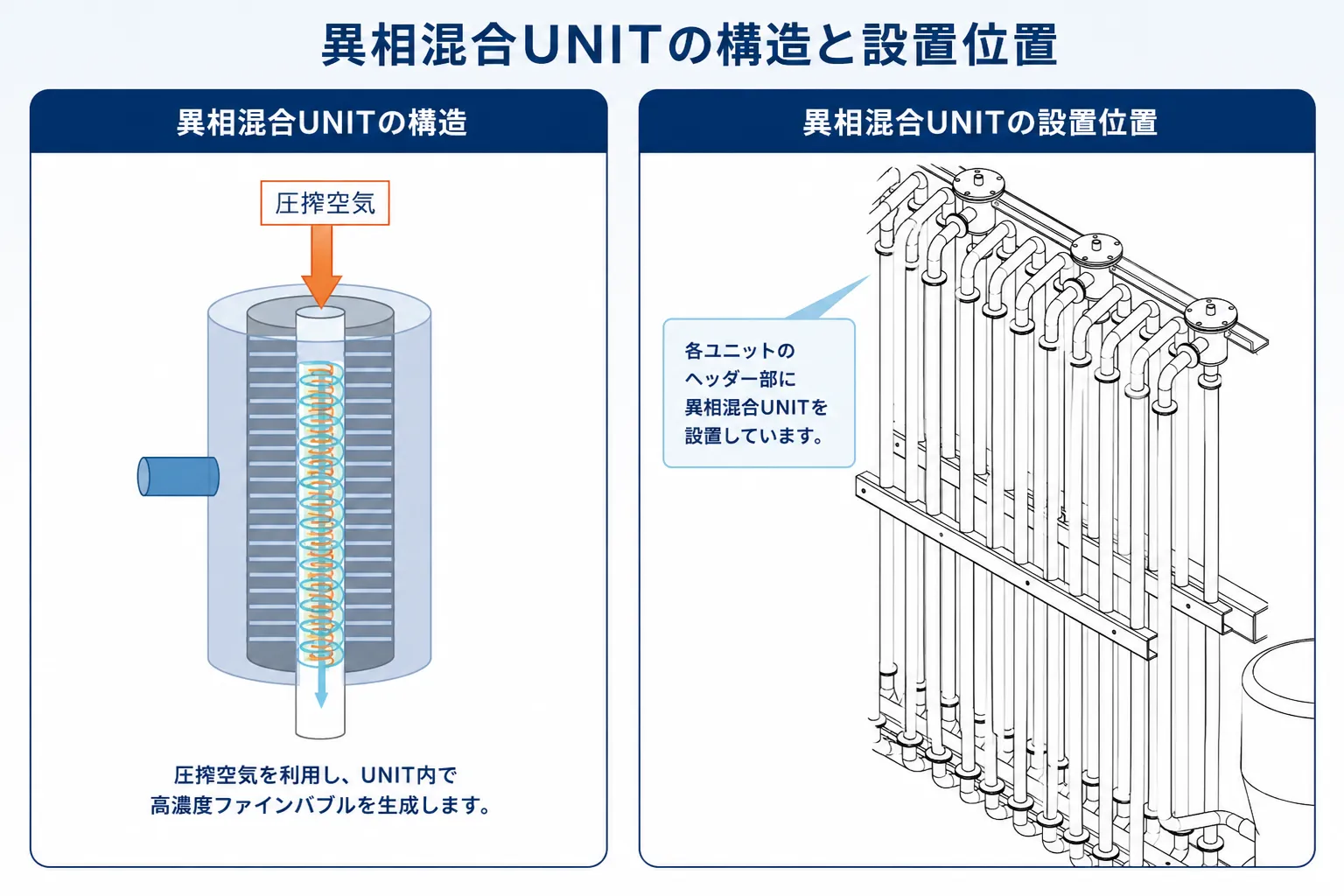
Heterogeneous mixture UNIT
QCL-SDAF efficiently mixes gases, liquids, and solids by passing the target wastewater through a phase-mixing unit.
High-efficiency solid-liquid separation is achieved through the use of high-concentration fine bubbles.
Mix the entire contents within the unit.
The target wastewater and fine bubbles are efficiently agitated and mixed.
Powerful cyclone reaction
It quickly mixes gases, liquids, and solids to generate high-concentration fine bubbles.
Enhance the cohesive effect
Negatively charged bubbles enhance compatibility with SS and flocculants.
Highly efficient solid-liquid separation
It efficiently separates fine suspended solids and oil particles by flotation, reducing the load on subsequent processing stages.
Expected processing effect
Heavy metals 95% or more / TP 95% or more / Chromaticity 90% or more / SS 95% or more
COMPARISON
“Instead of trying to ”guess" the ingredients, mix them thoroughly first.
In typical pressurized flotation devices, flocs and air bubbles are brought into contact within the flotation tank.
QCL-SDAF isThe entire volume of wastewater is passed through a phase-mixing unit, where it is forcibly mixed.
It improves the contact efficiency with fine bubbles.
Inside the flotation tank
Apply air bubbles.
- Uneven mixing is likely to occur.
- Air bubble loss is likely to occur.
- Contact efficiency is difficult to stabilize.
- Flocculation and variations in bubble size are likely to occur.
Within UNIT,
Mix thoroughly first.
- The entire volume of the target wastewater passes through.
- Forced mixing within the unit
- Improve contact efficiency with fine bubbles
- It exhibits highly efficient solid-liquid separation.
Save space
Separation efficiency
Change the size of the equipment.
Through highly efficient solid-liquid separation,
The size of the flotation tank and equipment has been significantly reduced.
The flotation tank is approximately 1/3 to 1/4 full.
The entire device can be miniaturized to about 1/3 to 1/2 of its original size.

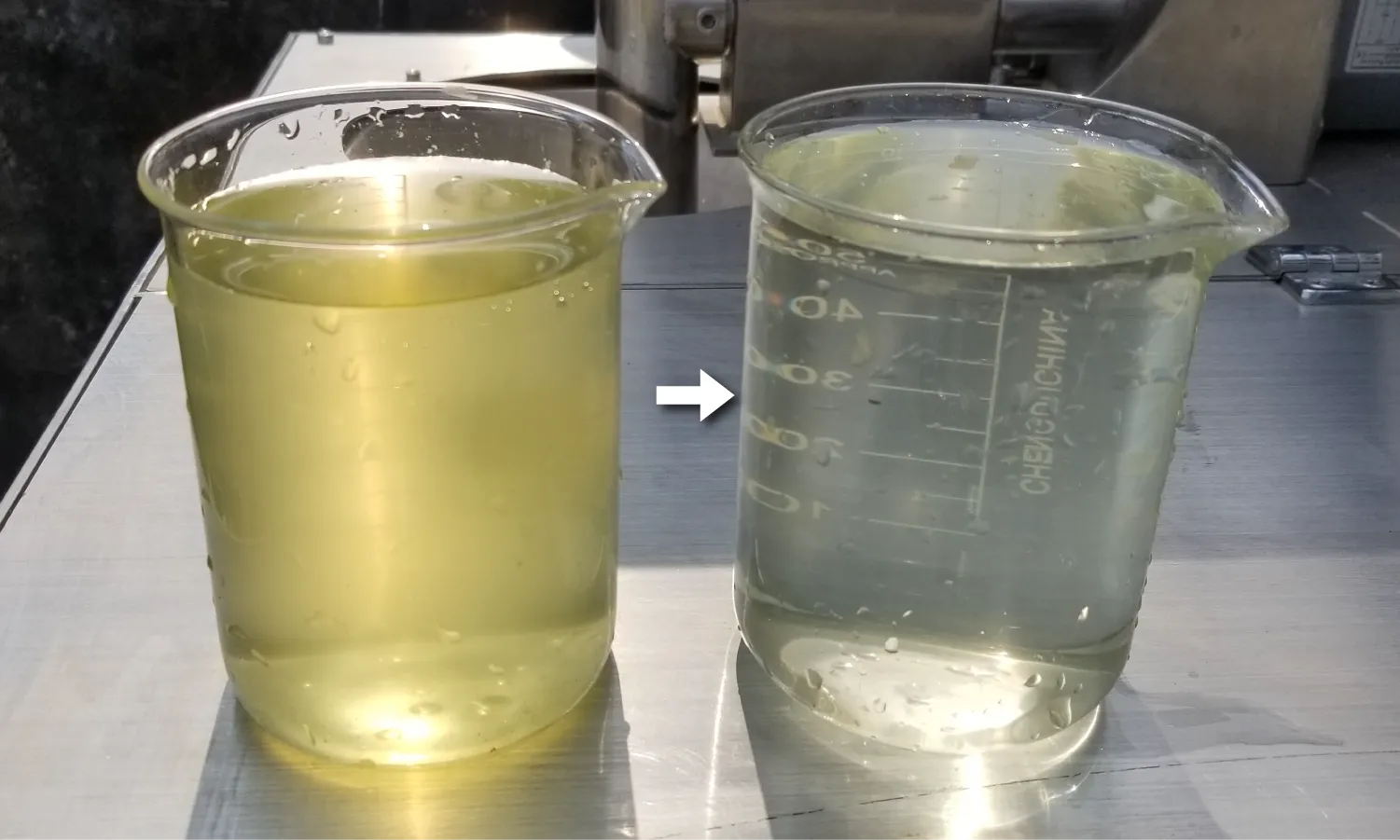
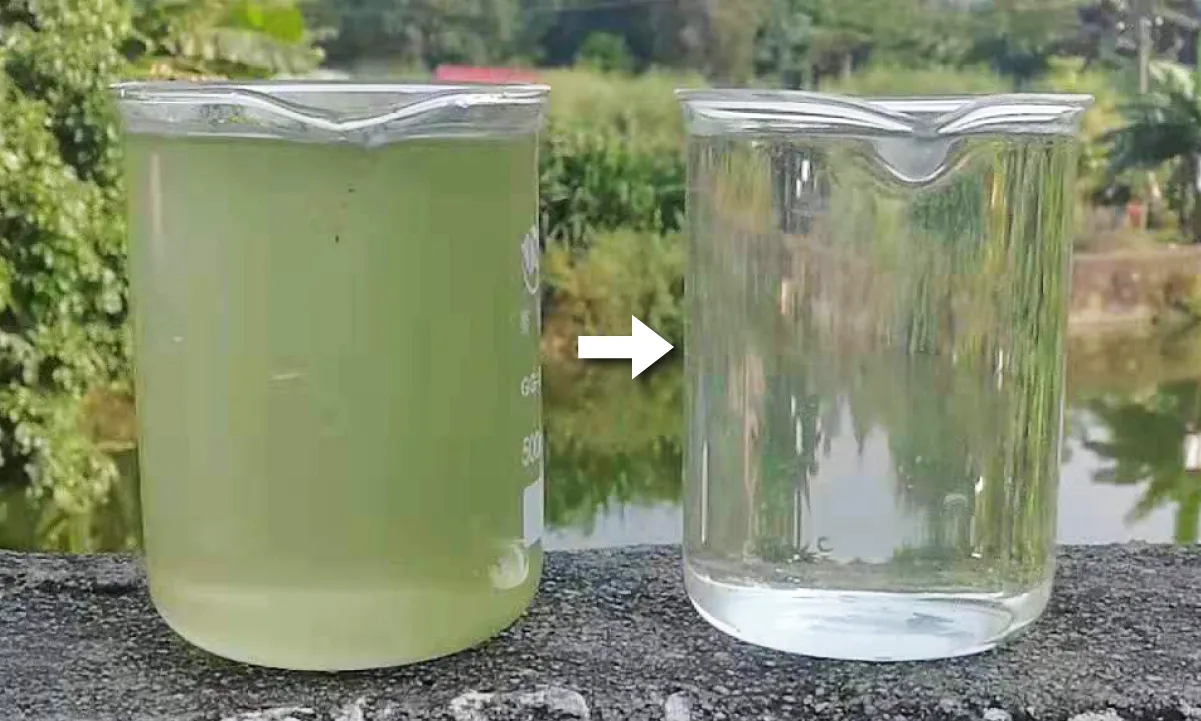
BEFORE / AFTER
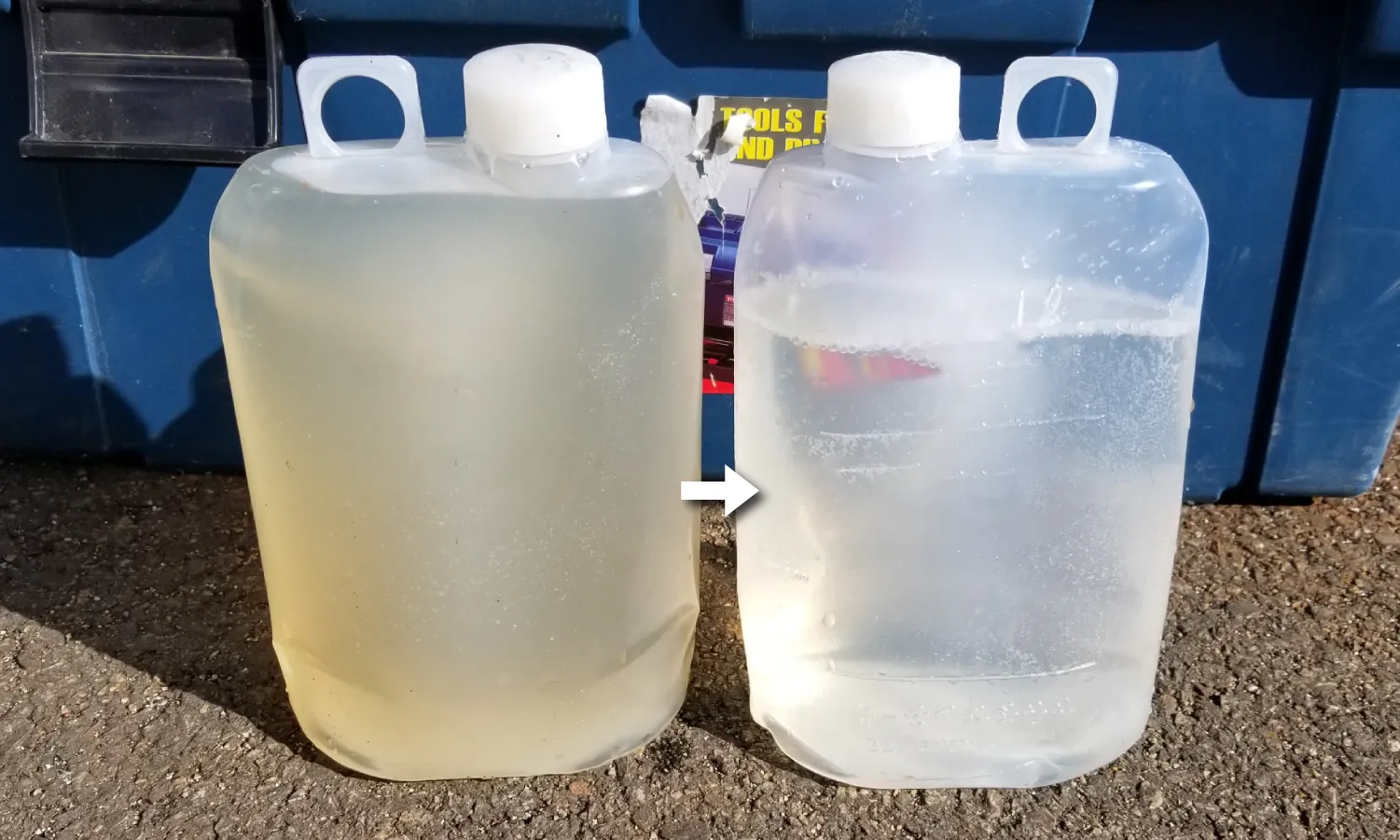
Comparison of water quality before and after treatment
Turbid wastewater is transformed into clear treated water through pressurized flotation treatment.
Before implementation
- Turbidity
- Odor
- oil
After implementation
- Transparency
- SS reduction
- Stabilization process


FAQ
FAQ
Click to see more details.
What is the pressurized flotation method?
By utilizing the buoyancy of air bubbles, it efficiently removes suspended solids such as suspended solids and oil, contributing to the stabilization of wastewater treatment.
The treatment of suspended solids in water is extremely important in the wastewater treatment process.

What is pressurized levitation?
This technology, which uses microbubbles to separate suspended solids, is widely used in water treatment.
The performance of the pressurized flotation device (from another manufacturer) currently in use is deteriorating.
Recently, the performance of the pressurized flotation system has been declining. The processing speed for solid-liquid separation also seems noticeably slower than before.
It's probably deteriorated because we've been using it for over 30 years. Installing a state-of-the-art device would solve the problem immediately, but due to budget constraints, we'd like to continue using it for a while longer if possible. Is there any good temporary solution?
However, if there are holes in the device itself due to corrosion, it's a sign that its lifespan is nearing its end. In the unlikely event that the wastewater discharge significantly exceeds the standards, you could be charged a huge fine. It would probably be safer to replace it sooner rather than later to avoid serious problems.
Is there an easy way to determine if a pressurized levitation device is functioning correctly?
On the other hand, if no bubbles are observed in the solid-liquid separation tank, it may indicate that the adjustments are not being made correctly.
When introducing a pressurized levitation system, what points should be considered when making a selection?
The following four points are important:
- Ease of producing microbubbles
- Low maintenance costs
- Small area occupied
- The balance between price and performance
It would be quickest to consult a specialist in this situation.
Please contact us first to discuss your current drainage situation.
DOCUMENTS
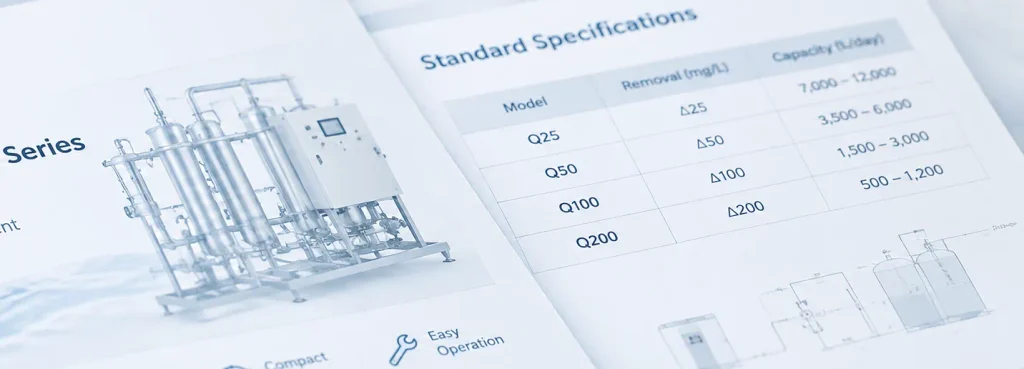
Product leaflets and company profiles
You can view product information and company profiles all in one place.